How to Calculate the ROI of an RPA Investment

RPA projects are usually sold in a single sentence: "The robot does this job in seconds." That is true, but it is not enough to make an investment decision. Whether an automation actually pays off depends on the volume of work, how standardized it is, the exception rate, and the cost of maintaining the robot. In this article, we outline a simple but realistic method for calculating the return on investment (ROI) of RPA.
The Basic ROI Formula
The core of the calculation is simple: the net benefit an automation delivers over a given period is divided by the total investment made over the same period.
ROI = (Total benefit − Total cost) / Total cost
The real work is filling in both sides correctly. Overstating the benefit and understating the cost is the most common mistake in RPA projects.
The Benefit Side: What to Include
- Recovered labor time: Monthly transaction volume × manual time per transaction × automation rate. The automation rate is the share of transactions the robot can complete without human intervention; it is never 100%.
- Error and rework costs: The time spent correcting a mis-entered invoice, an incorrect declaration, or a delayed reconciliation, along with any penalties incurred.
- Speed-driven gains: Early payment discounts, shorter order-to-delivery times, and avoided late penalties.
- Capacity: Handling growing workloads without hiring additional staff. In growing companies, this is often the single largest benefit.
The Cost Side: What Gets Overlooked
- Analysis and development: Process analysis, robot design, testing, and go-live.
- Licensing and infrastructure: RPA platform licenses and the servers or virtual machines the robots run on.
- Maintenance: Screen changes in target applications, along with regulatory and business rule updates, require the robot to be maintained regularly. In addition to the first-year cost, a recurring annual maintenance budget should be planned.
- Exception handling: The time of the people who review transactions the robot cannot resolve.
- Change management: Transitioning teams to the new workflow and training them.
A Sample Calculation
The figures below are hypothetical values chosen to illustrate the method:
- 4,000 supplier invoices per month, 6 minutes of manual processing per invoice → 400 hours per month.
- The robot processes 80% of invoices without human intervention → 320 hours recovered per month.
- The remaining 20% are exceptions, reviewed by a specialist in an average of 3 minutes per invoice → 40 hours of new workload per month.
- Net gain: 280 hours per month, or roughly 3,360 hours per year.
These recovered hours are multiplied by the organization's fully loaded hourly cost, and the reduction in error correction and delay costs is added. On the other side go the first-year development, licensing, and infrastructure costs plus the annual maintenance budget. This shows both the first-year ROI and how many months it takes for the investment to pay for itself.
Which Processes Deliver High ROI?
Scoring every process against the same criteria makes prioritization easier:
- Volume: How many times a month is it repeated?
- Rule-based nature: Are decisions governed by clear rules, or by judgment?
- Input quality: Is the data digital and structured, or are they scanned documents?
- Stability: Do the process and the screens it uses change frequently?
- Error impact: How costly is a single error?
High-volume, rule-based, stable processes with digital inputs deliver the fastest returns. To see which processes meet these criteria based on data rather than guesswork, you can use process mining.
Common Mistakes
- Assuming a 100% automation rate: In reality there are always exceptions; if they are not accounted for, the benefit looks larger than it is.
- Forgetting maintenance: A single screen change in a target system can stop the robot. A calculation that leaves out maintenance costs becomes misleading by the second year.
- Counting recovered time as direct savings: If the freed-up time is not redirected to higher-value work, the benefit stays on paper.
- Not measuring: If the current state is not measured before go-live, the improvement afterward cannot be proven.
Conclusion
A sound RPA ROI calculation does more than simplify the investment decision; it also determines which process to start with. A pilot that starts with the right process delivers quick results and funds subsequent automations from its own returns. For a real-world example, see our article on customs declaration automation, and to assess the automation potential of your processes, explore our RPA and intelligent automation service.
Related service
RPA and Intelligent Automation Solutions
Latest Insights
 blueskydx
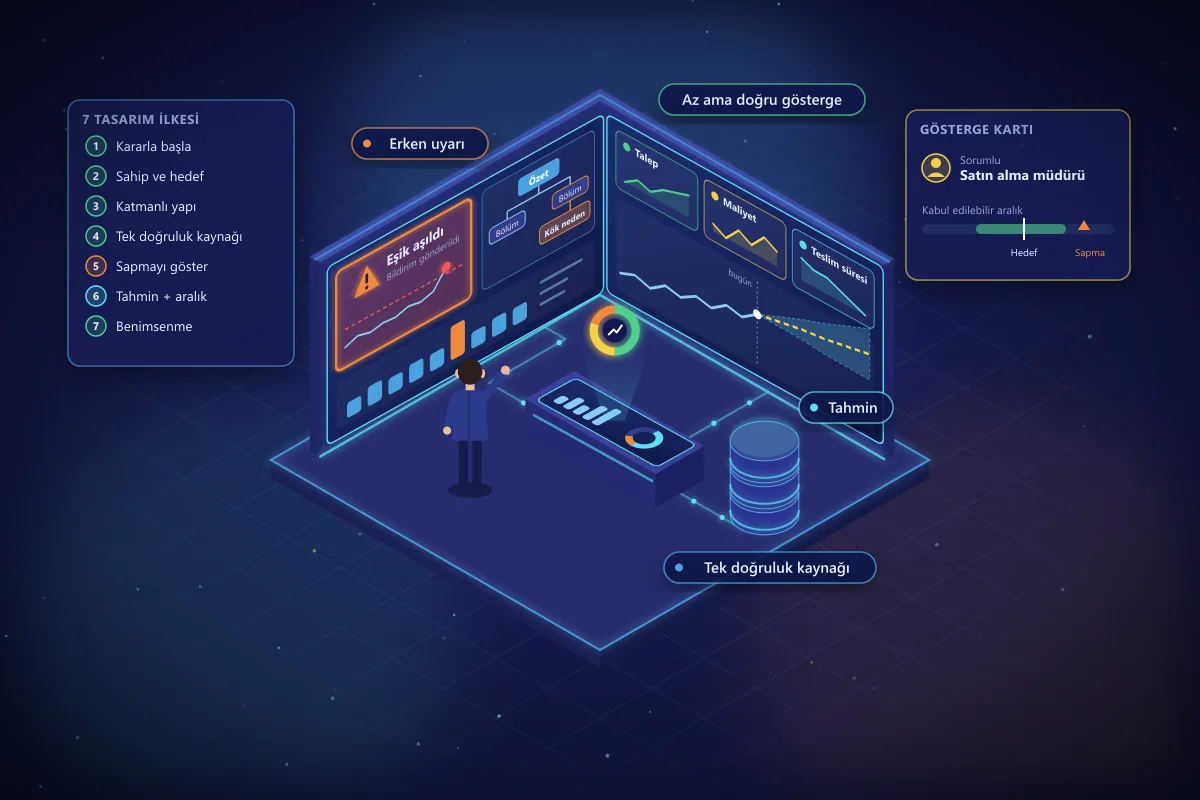
AI-Powered Management Dashboard Design: 7 Principles
Most management dashboards show a lot but drive few decisions. Seven design principles for an effective dashboard, from choosing the right indicators to early warnings, forecasting models, and user adoption.
 blueskydx
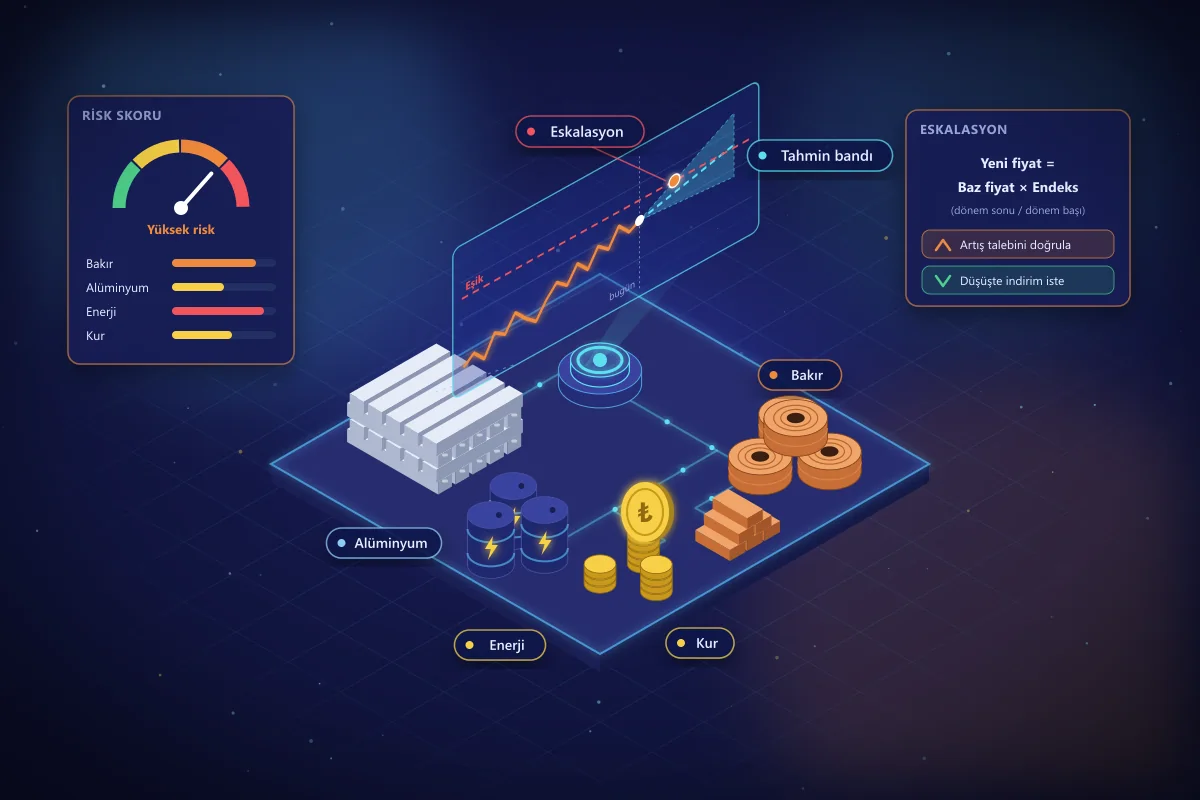
Commodity Price Risk: AI Forecasting and Escalation
Swings in copper, aluminum, energy, and exchange rates directly affect procurement costs. How to manage commodity risk with AI-powered price forecasting and escalation tracking.
 blueskydx
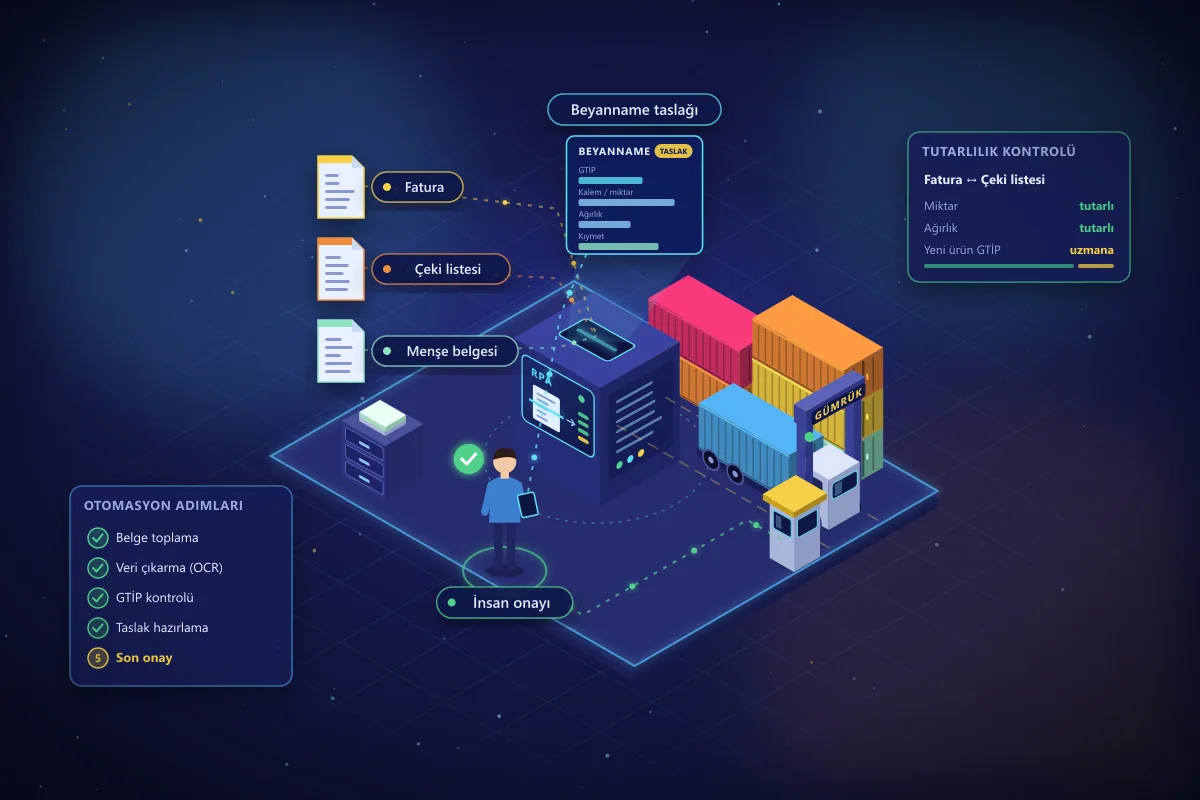
Customs Declaration Automation: Speeding Up With RPA
From invoices, packing lists, and certificates of origin to the draft declaration: which customs steps can be automated with RPA, and which should remain subject to human approval? A step-by-step guide.
