Commodity Price Risk: AI Forecasting and Escalation
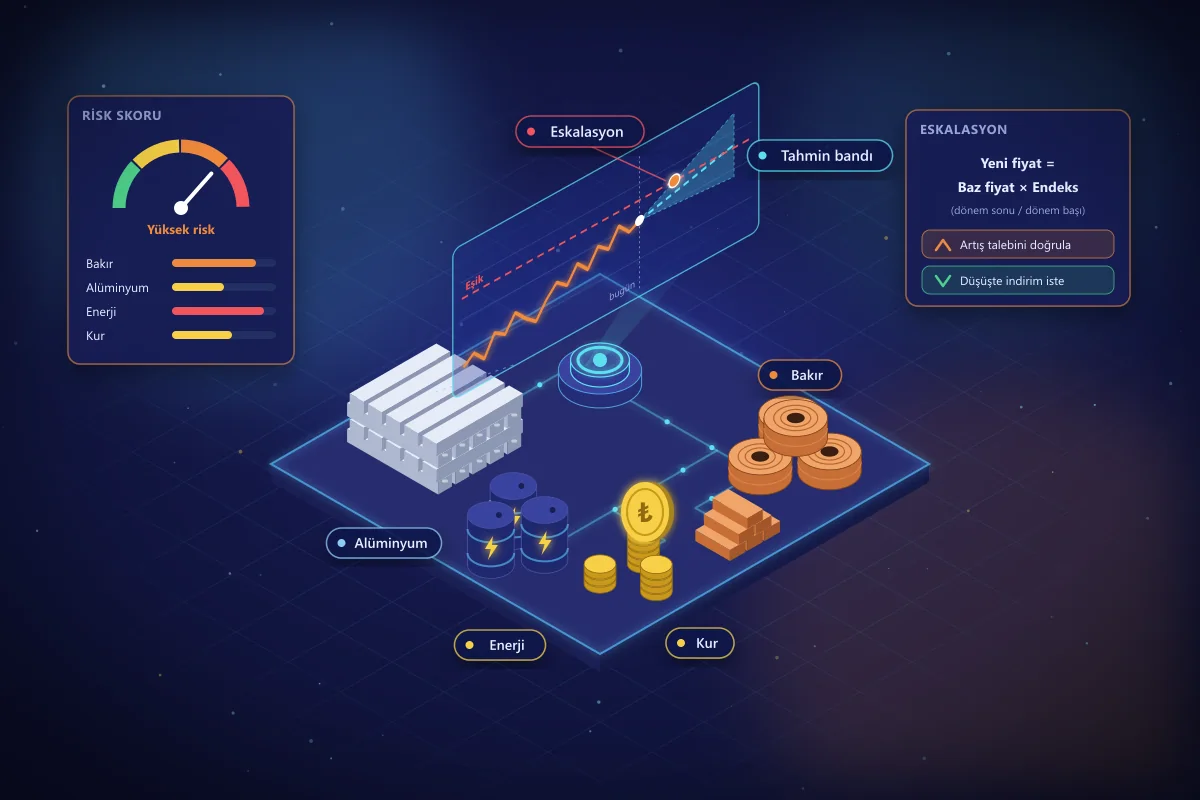
For manufacturers, a significant share of costs depends on raw materials whose prices are set in global markets: metals, energy, plastics, agricultural products, and the exchange rates that affect all of them. Prices can shift substantially within a few weeks. A procurement team that cannot see these fluctuations in time either buys at high prices or misses the price adjustment rights in its contracts.
In this article, we explain how data and AI can be used to manage commodity price risk.
How Does Commodity Price Risk Affect Procurement?
- Purchase timing: Buying the same quantity of raw material a few weeks earlier or later can make a major difference in cost.
- Contract escalations: In many supply contracts, the price is updated based on a specific index (for example, a metals exchange price or an exchange rate). A company that does not track the index regularly may miss the chance to claim price decreases in its favor.
- Budgeting and pricing: If changes in raw material costs are not spotted in time, sales prices and budget targets drift away from reality.
Why Manual Tracking Falls Short
In most organizations, commodity tracking is done in spreadsheets: someone copies prices from several sources every morning, draws a chart, and shares it by email. This works for a handful of commodities, but with dozens of raw materials, multiple currencies, and hundreds of contracts, it is both time-consuming and prone to blind spots. And spreadsheets do not, on their own, answer the question that really matters: "How does this price movement affect our costs and our contracts?"
What Does AI Change?
Bringing data into one place
Commodity exchange prices, exchange rates, economic indicators, and the organization's own purchase history come together on a single platform. Prices update automatically, so no one needs to copy and paste every morning.
Trend forecasting
Machine learning models use historical price movements, seasonality, and related indicators to produce short- and medium-term trend forecasts. What matters here is that the forecast is presented not as a single number but as a range with a confidence level. No model can know the market with certainty; the goal is to make the probabilities visible to the decision-maker.
Anomaly and risk alerts
When a commodity's price moves outside its normal fluctuation range, or a contract's escalation threshold is crossed, the system alerts the responsible person. Risk scores show which raw materials and which suppliers require priority attention.
Escalation management
Once the index links in contracts are defined in the system, the price difference to be calculated for each period is generated automatically. The procurement team can compare a supplier's price increase request against its own calculation, and during downturns it can see which contracts warrant a price reduction request.
Where to Start
- Identify the commodities with the greatest cost impact. Typically, a few raw materials account for most of the total risk.
- Map the index links in your contracts. Which contract is tied to which index, over which period, and with which formula?
- Connect your data sources. Bring price and exchange rate data together with the organization's purchase history in the same model.
- Design the decision screen. A clean summary the manager will check every day: favorite commodities, threshold breaches, upcoming escalations, and recommended actions.
- Evaluate the model continuously. Regularly compare forecasts with actual prices; a model whose accuracy is not measured cannot be trusted.
An Example From the Field
In our commodity analysis and forecasting project, where we combined global commodity prices, exchange rates, and economic indicators on a single platform, forecasts reached 75% accuracy and time spent on market monitoring fell by 80%. Instead of preparing spreadsheets every morning, managers now focus on the few points that need attention.
Conclusion
Commodity prices cannot be controlled, but price risk can be made visible and acted on in time. A setup that brings data into one place, anticipates trends, and links them to contracts turns procurement from a reactive function into a proactive one. If you would like support in this area, explore our data analytics and decision support service.
Related service
Data Analytics and Decision Support Frameworks
Latest Insights
 blueskydx
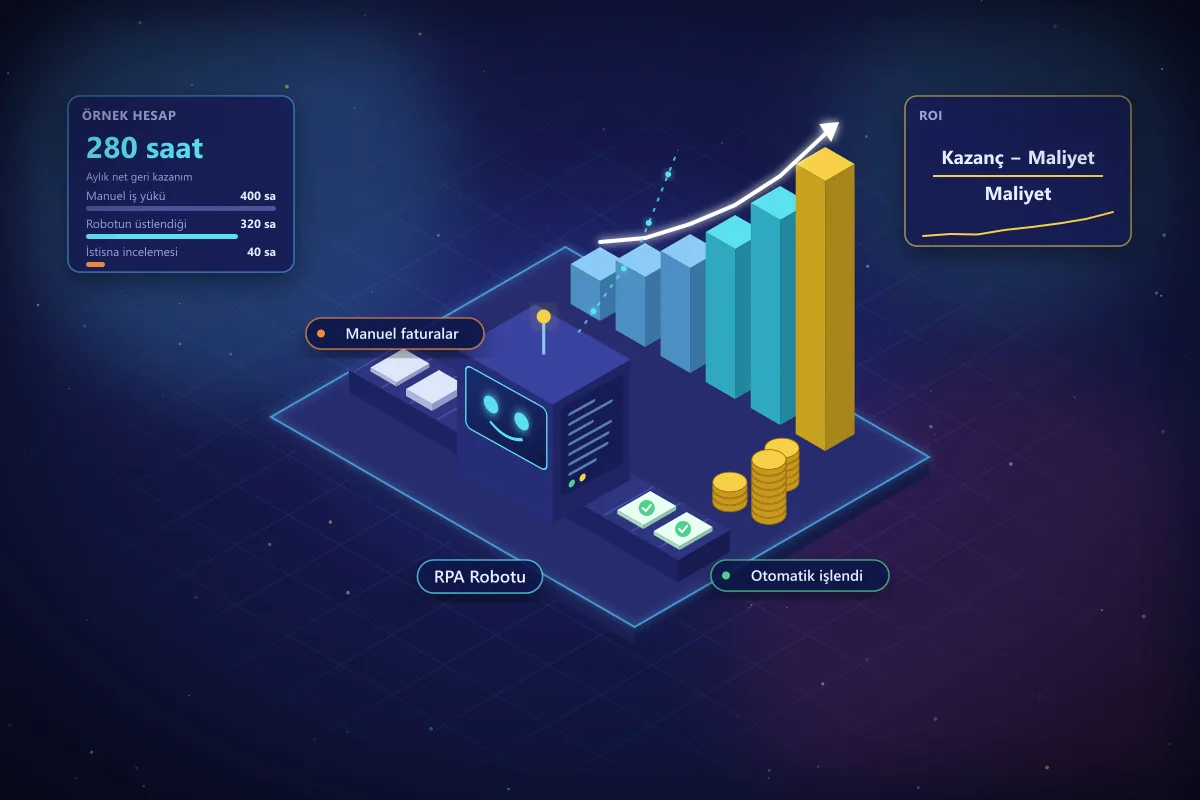
How to Calculate the ROI of an RPA Investment
Before starting an RPA project, how do you know which processes will actually pay off? A step-by-step ROI guide covering cost items, benefit items, a sample calculation, and common mistakes.
 blueskydx
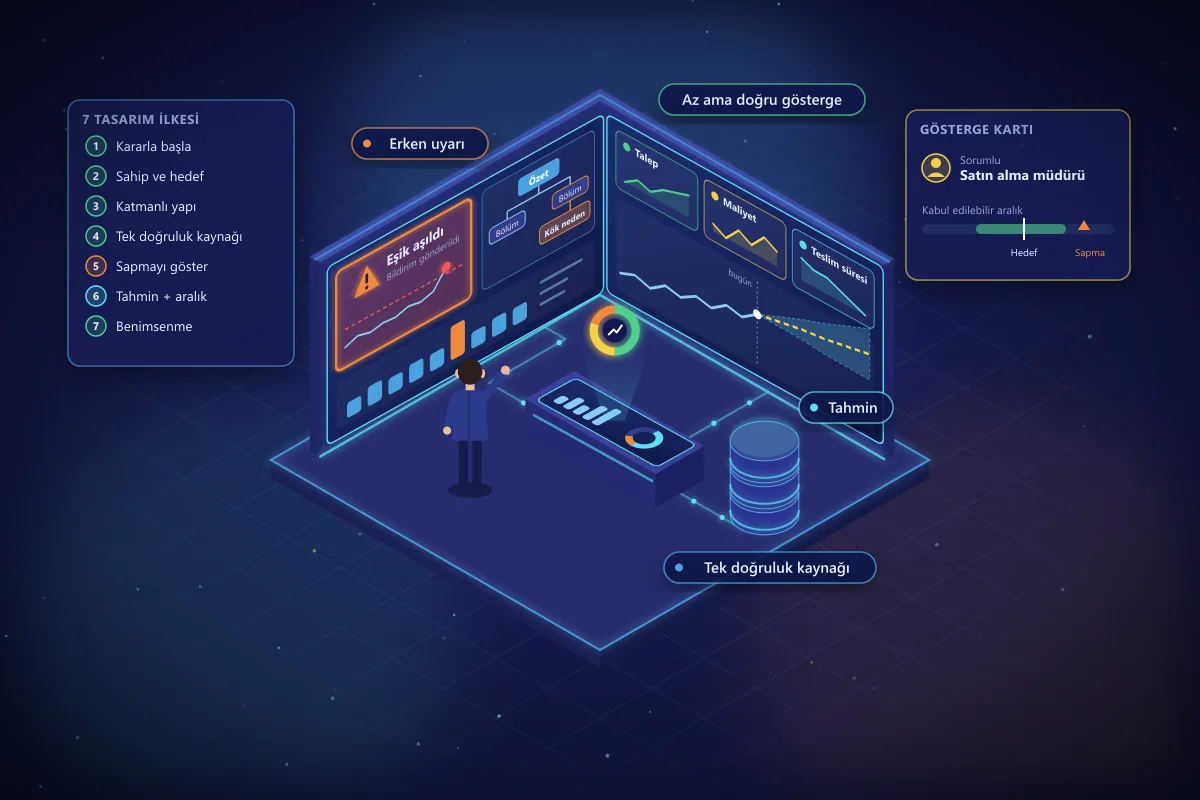
AI-Powered Management Dashboard Design: 7 Principles
Most management dashboards show a lot but drive few decisions. Seven design principles for an effective dashboard, from choosing the right indicators to early warnings, forecasting models, and user adoption.
 blueskydx
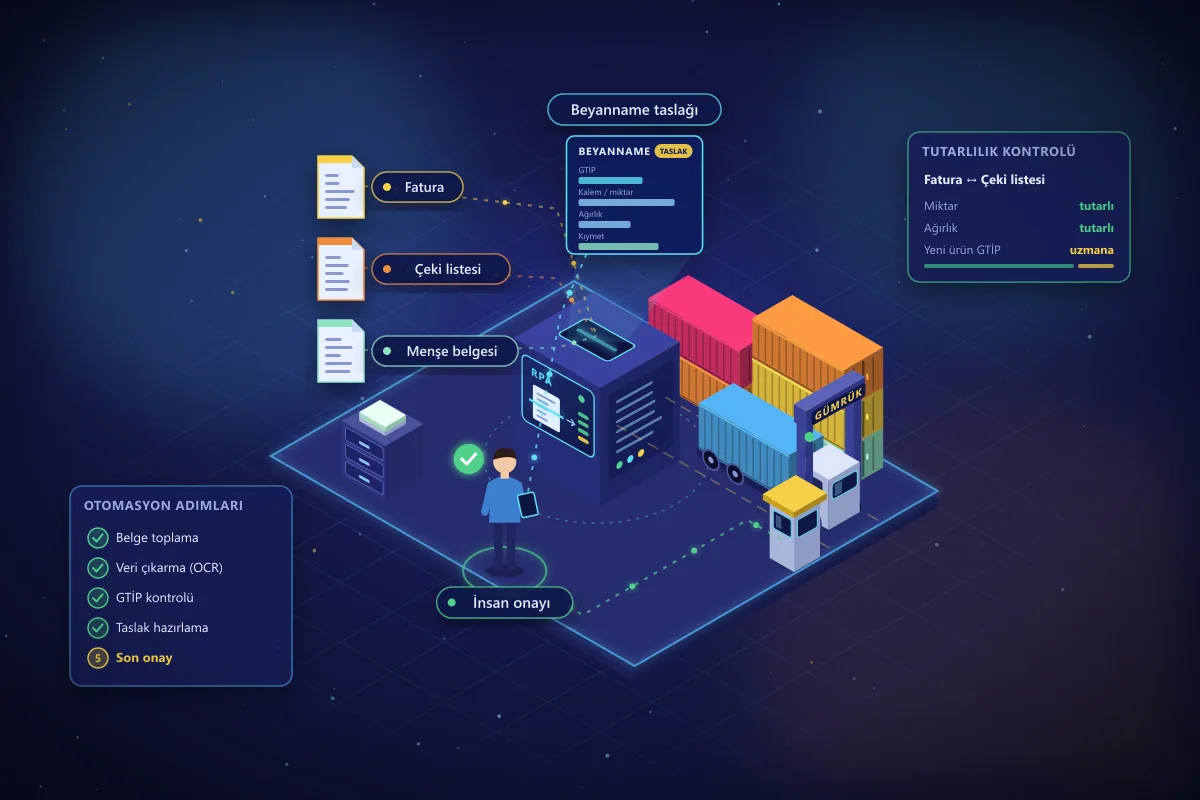
Customs Declaration Automation: Speeding Up With RPA
From invoices, packing lists, and certificates of origin to the draft declaration: which customs steps can be automated with RPA, and which should remain subject to human approval? A step-by-step guide.
