Zero Trust Architecture: A Modern Approach to Security
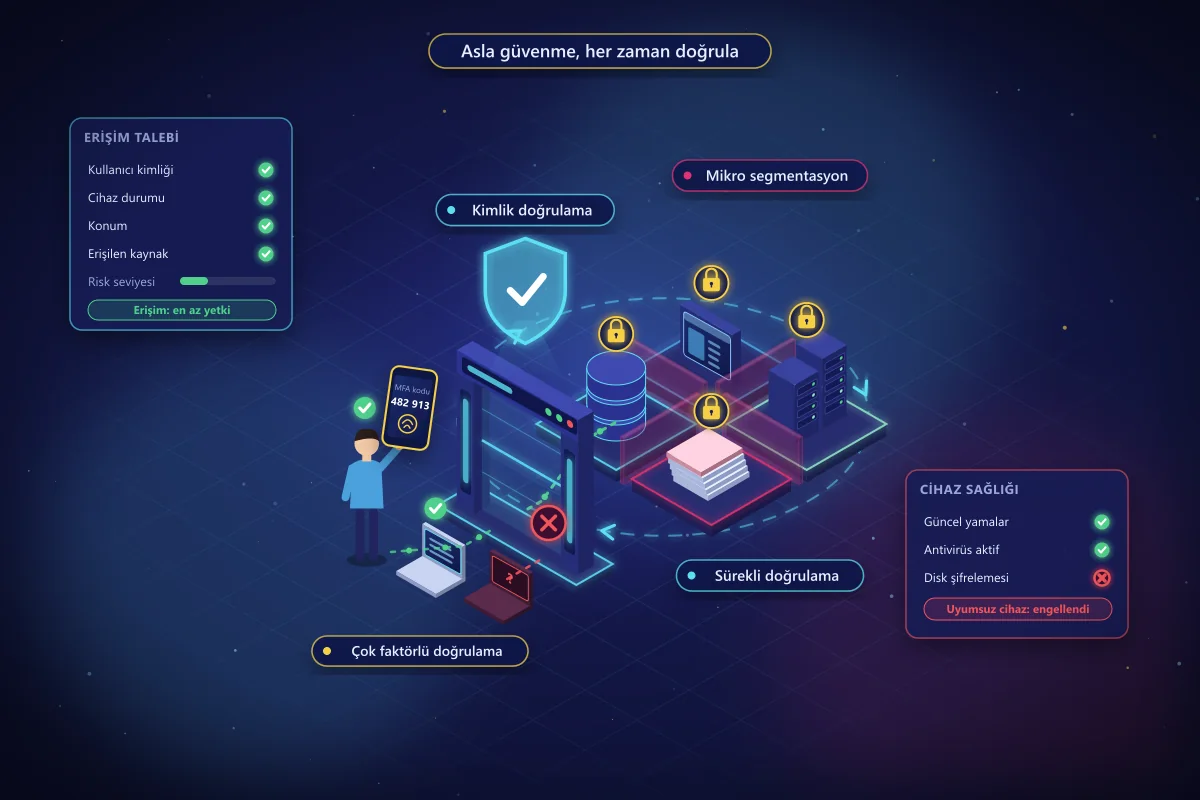
Zero Trust architecture is a modern security paradigm that moves beyond the traditional perimeter-based mindset and is built on verifying every access request. Grounded in the principle of "never trust, always verify," this model is shaping the future of enterprise cybersecurity.
Why the Traditional Security Model Falls Short
For years, organizations protected the network perimeter with firewalls and VPNs and treated the internal network as safe. But this "castle-and-moat" approach no longer fits the realities of modern business. Remote employees, cloud applications, mobile devices, and IoT sensors have made the corporate network boundary nearly meaningless.
Moreover, it is now well established that insider threats account for a significant share of all security breaches. In the traditional model, a single compromised set of employee credentials can give an attacker unrestricted movement inside the network. Zero Trust was designed precisely to close this gap.
The Core Principles of Zero Trust
Zero Trust architecture rests on a few core principles. The first is explicit verification: every access request is evaluated against multiple factors, including user identity, device posture, location, the resource being accessed, and risk level. The second is least privilege: users and applications are granted only the minimum access required to perform their tasks. The third is assume breach: the system is designed on the assumption that a breach may already have occurred, and segmentation, monitoring, and response mechanisms are built accordingly.
Identity: The New Security Perimeter
In the Zero Trust model, identity sits at the center of security. Multi-factor authentication (MFA), conditional access policies, single sign-on (SSO), and privileged access management (PAM) are the core components of this layer.
Modern identity management platforms can analyze user behavior to apply risk-based authentication. For example, when a user requests access from an unusual location or device, additional verification steps are triggered. AI-powered anomaly detection can block access attempts made with stolen credentials in real time.
Micro-Segmentation and Network Security
In a traditional flat network, an attacker who gets inside can reach critical systems through lateral movement. Micro-segmentation dramatically reduces this risk by dividing the network into small, isolated zones. Each segment has its own security policies, and traffic between segments is tightly controlled.
Software-defined networking (SDN) technologies make it possible to implement micro-segmentation dynamically and at scale. Workload-based segmentation isolates applications from one another and prevents a vulnerability in one application from affecting the others.
Device Security and Endpoint Protection
Zero Trust verifies not only the user but also the device. Health checks are performed on the requesting device: Are the latest patches installed? Is antivirus software active? Is disk encryption enabled? Non-compliant devices have their access restricted or blocked entirely.
EDR (Endpoint Detection and Response) solutions detect suspicious activity on endpoints and trigger automated response mechanisms. XDR (Extended Detection and Response) extends this protection to the network, email, and cloud layers, providing holistic threat visibility.
Starting Your Zero Trust Journey
Zero Trust is a strategy, not a product, and it should be implemented in phases. The first step is to assess the organization's current security posture and asset inventory. Next, the most critical assets and data flows are identified. The identity management infrastructure is then strengthened, MFA is rolled out broadly, and micro-segmentation begins with pilot implementations.
This transformation requires cultural change as much as technology. Collaboration among security teams, IT departments, and business units is essential. At BlueSkyDX, we support organizations on their Zero Trust journey with current-state assessments, roadmap development, and implementation support. Our goal is to make security a natural part of business processes.
Related service
Digital Transformation Consulting
Latest Insights
 blueskydx
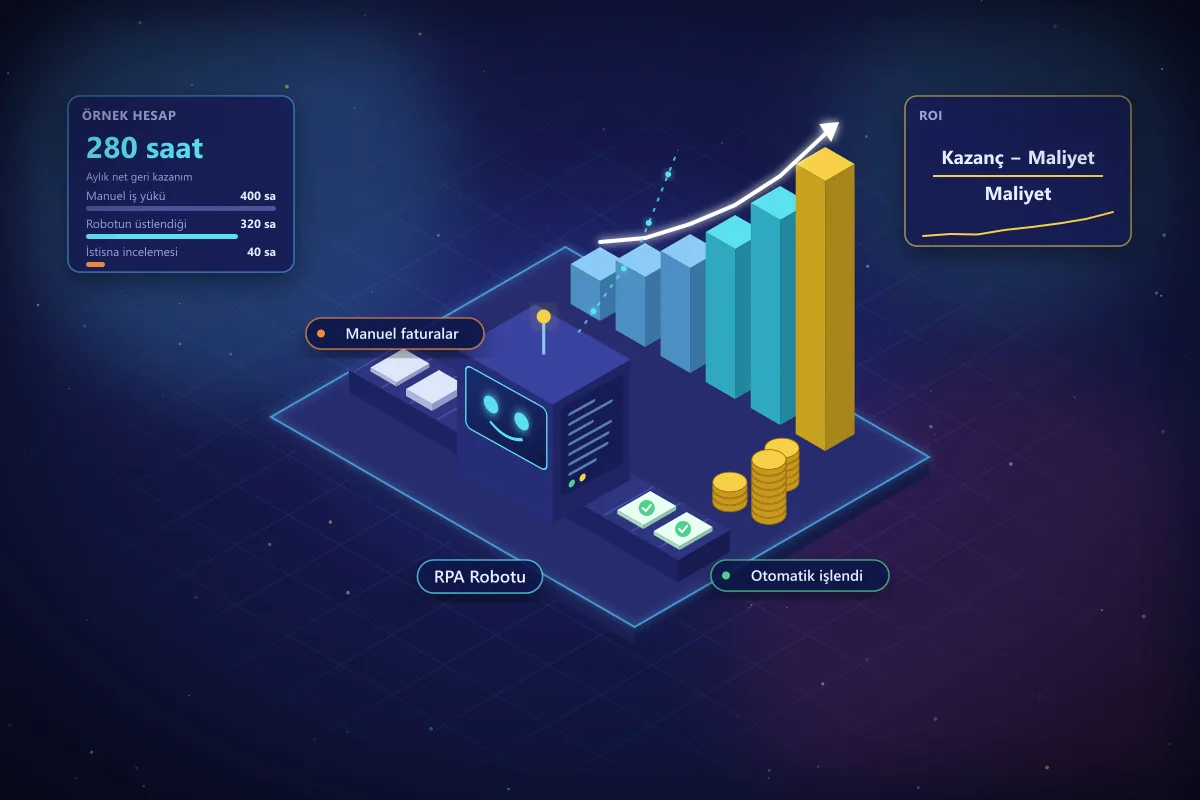
How to Calculate the ROI of an RPA Investment
Before starting an RPA project, how do you know which processes will actually pay off? A step-by-step ROI guide covering cost items, benefit items, a sample calculation, and common mistakes.
 blueskydx
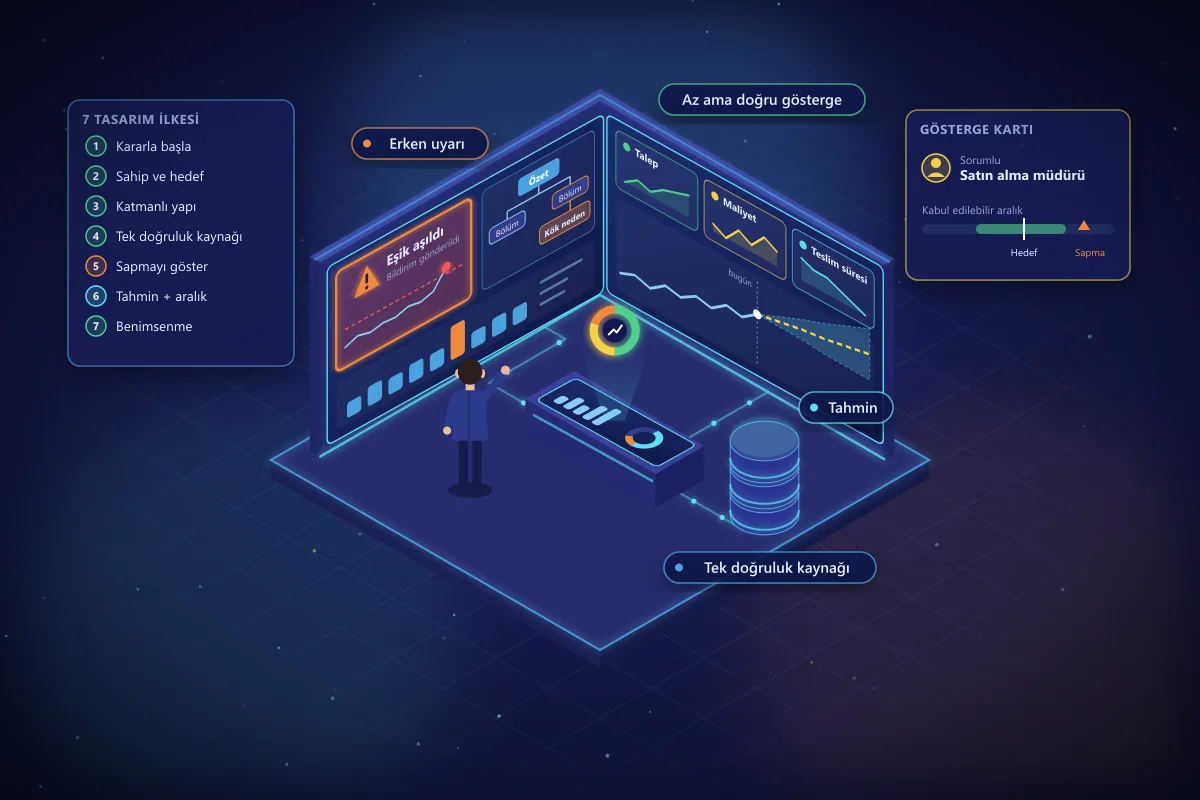
AI-Powered Management Dashboard Design: 7 Principles
Most management dashboards show a lot but drive few decisions. Seven design principles for an effective dashboard, from choosing the right indicators to early warnings, forecasting models, and user adoption.
 blueskydx
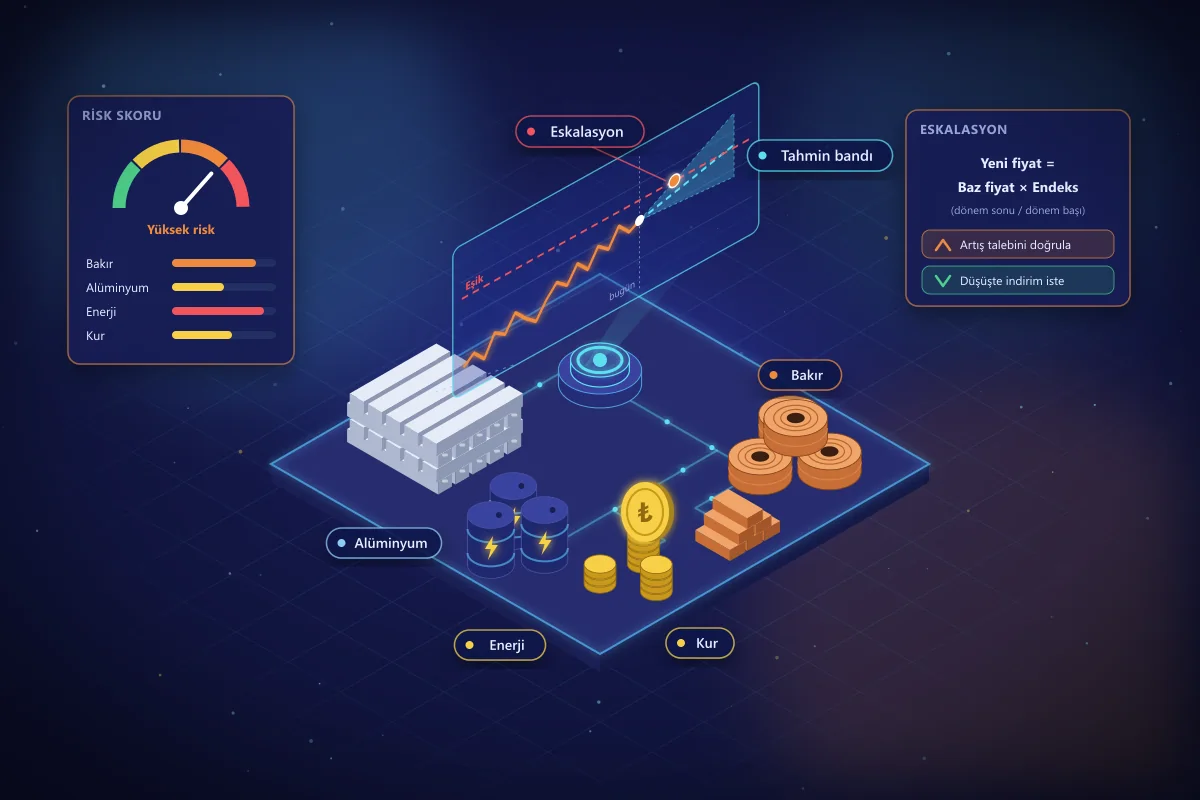
Commodity Price Risk: AI Forecasting and Escalation
Swings in copper, aluminum, energy, and exchange rates directly affect procurement costs. How to manage commodity risk with AI-powered price forecasting and escalation tracking.
