What Is a Dark Factory? Components and Roadmap
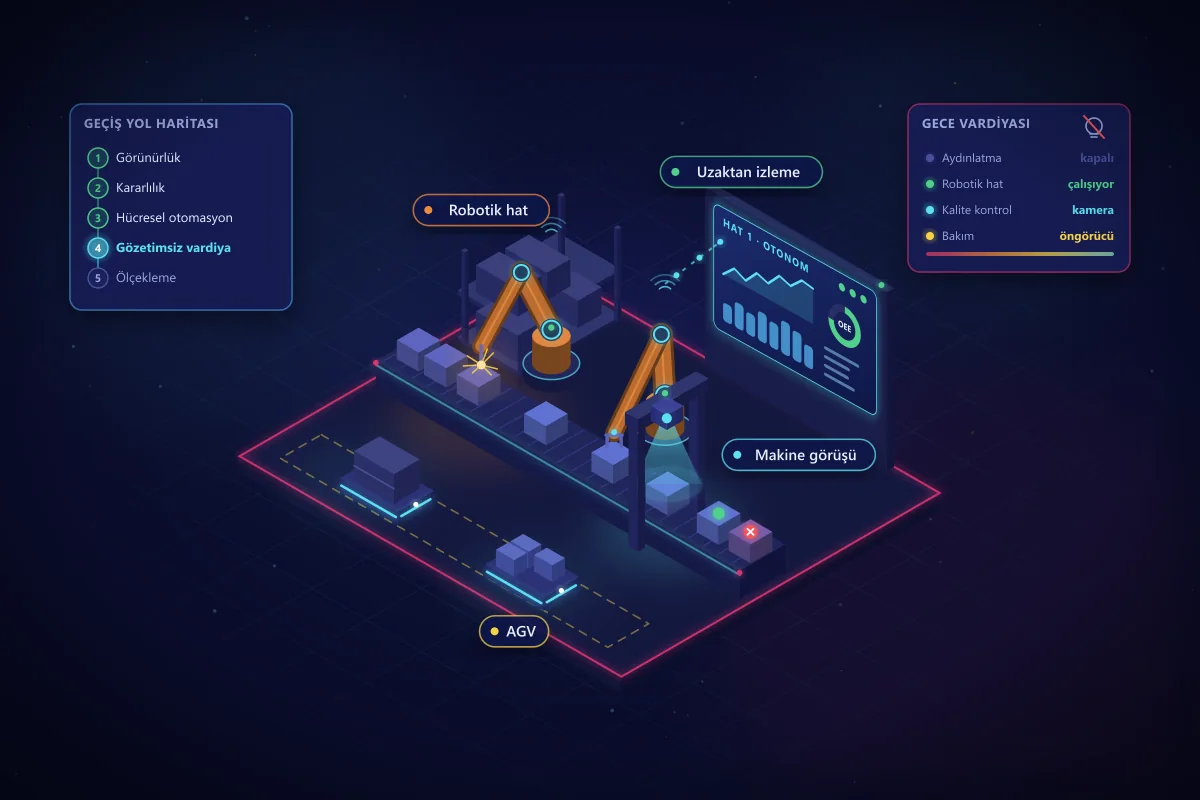
A "dark factory" (also known as lights-out manufacturing) is a concept describing facilities where production runs largely without human intervention. The name comes from the fact that the machines do not need lighting, heating, or a constant operator presence to run. FANUC's facilities in Japan, where robots build robots, are among the best-known examples of the concept.
Beyond being a goal, the dark factory also describes a direction: an operation that makes data-driven decisions at every stage of production, monitors its own state, and responds to deviations on its own. In this article, we explain the components of the concept, which types of production it suits, and a realistic transition path.
The Components of a Dark Factory
Robotics and automated material handling
Industrial robots take on tasks such as assembly, welding, packaging, and machine tending. Autonomous mobile robots (AMRs) and automated guided vehicles (AGVs) move raw materials from the warehouse to the line, work-in-progress between stations, and finished goods to shipping.
Sensors and the industrial IoT
Temperature, vibration, current, pressure, and cycle time data from machines is collected continuously by sensors. This data stream is the facility's "nervous system"; it is the only way to know what is happening without a human watching.
Quality control with machine vision
Cameras and deep learning models inspect every product on the line, detecting surface defects, dimensional deviations, and assembly errors. Defective products are automatically rejected, and error trends are fed back into the parameters of the relevant station.
Predictive maintenance
In a dark facility, an unexpected breakdown means downtime that may go unnoticed until morning. That is why equipment data is monitored with AI models, and maintenance is scheduled before failure risk emerges.
MES, digital twin, and a central management dashboard
The manufacturing execution system (MES) manages work orders, materials, and traceability. The digital twin allows scenarios to be tested on a virtual replica of the facility. All of these layers connect to a central management dashboard through which managers monitor the facility remotely and intervene when necessary.
Which Types of Production Is It Suited For?
A dark factory is not the right goal for every type of production. The best candidates share these characteristics:
- High-volume, repetitive production,
- A standard product family with low variation,
- Stable, well-defined process parameters,
- Part geometry and material flow suited to automation.
Frequent product changeovers, flexible materials that require manual handling, or very small batches make a fully dark model difficult. In these cases, the goal is for specific cells or shifts to be able to run unmanned.
A Realistic Transition Roadmap
Converting a facility into a dark factory in one step is both risky and expensive. Successful transitions usually proceed in phases:
- Visibility: Machine and line data is collected, and OEE (overall equipment effectiveness), downtime reasons, and quality losses are monitored on a single screen. A process that is not measured cannot be made autonomous.
- Stability: Process parameters are standardized, and the root causes of the largest downtime and quality losses are eliminated.
- Cell-based automation: The most repetitive and standardized stations are converted into robotic cells, and material flow is automated.
- Unattended shifts: Selected lines run unmanned, starting with the night shift, supported by remote monitoring and predictive maintenance.
- Scaling: Gains are measured, and the model is extended to other lines.
Challenges and Key Considerations
- Investment cost: Investment in robotics, sensors, and software is high; the return calculation should be done phase by phase.
- Maintenance and technical capability: A dark factory is not "unmanned"; it is a factory that works with different people. Operators are replaced by maintenance, automation, and data specialists.
- Flexibility: High automation can make it harder to adapt to product changes; flexibility should be built into line design from the start.
- Cybersecurity: Connected machines expand the attack surface; network segmentation and access control should be part of the design.
An Example From the Field
In our dark factory project, where we combined robotics, IoT, and AI-driven decision-making on a single digital twin platform, human intervention fell by 90%, production efficiency rose by 60%, and the error rate dropped by 95%. The starting point of the project was not technology, but making visible where the line was losing data and where it was waiting.
Conclusion
A dark factory is not a facility built overnight; it is a journey that begins with visibility, continues with stability, and is completed with automation. To assess where you are on this journey, explore our digital transformation consulting service or get in touch with us.
Related service
AI-Powered Management Dashboard Design and Implementation
Latest Insights
 blueskydx
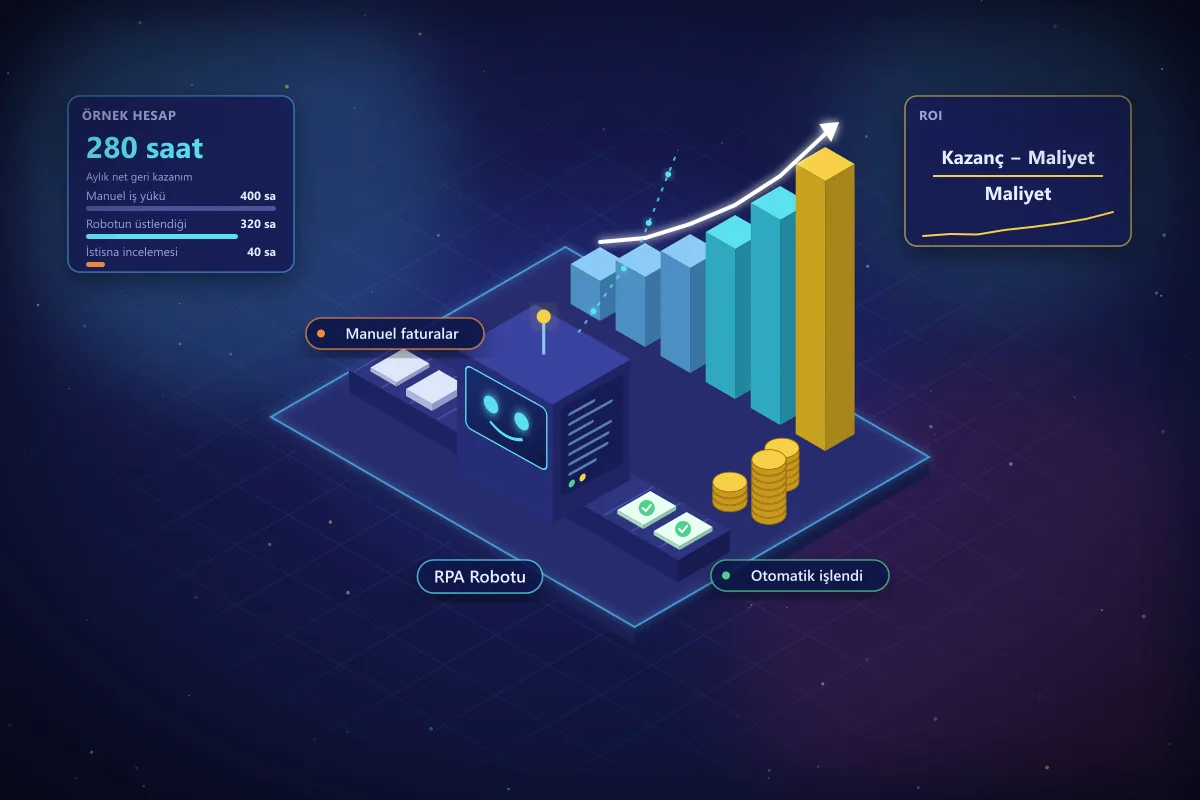
How to Calculate the ROI of an RPA Investment
Before starting an RPA project, how do you know which processes will actually pay off? A step-by-step ROI guide covering cost items, benefit items, a sample calculation, and common mistakes.
 blueskydx
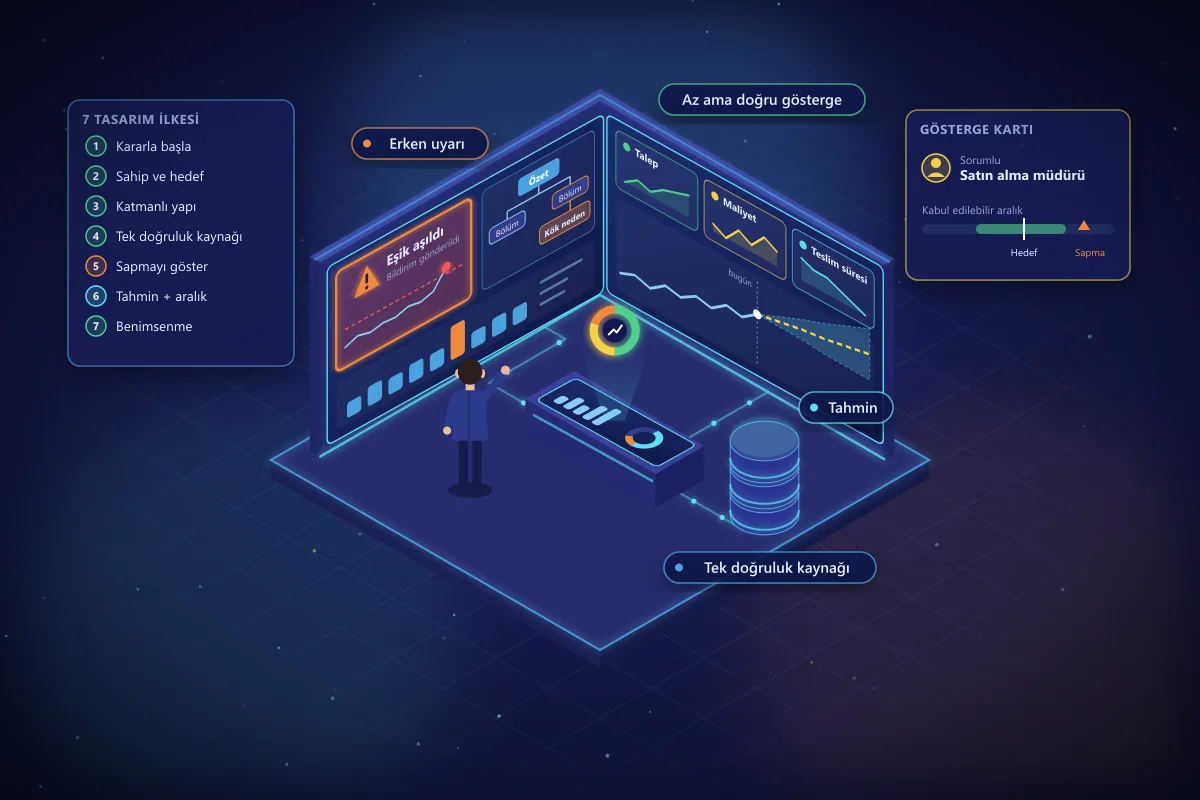
AI-Powered Management Dashboard Design: 7 Principles
Most management dashboards show a lot but drive few decisions. Seven design principles for an effective dashboard, from choosing the right indicators to early warnings, forecasting models, and user adoption.
 blueskydx
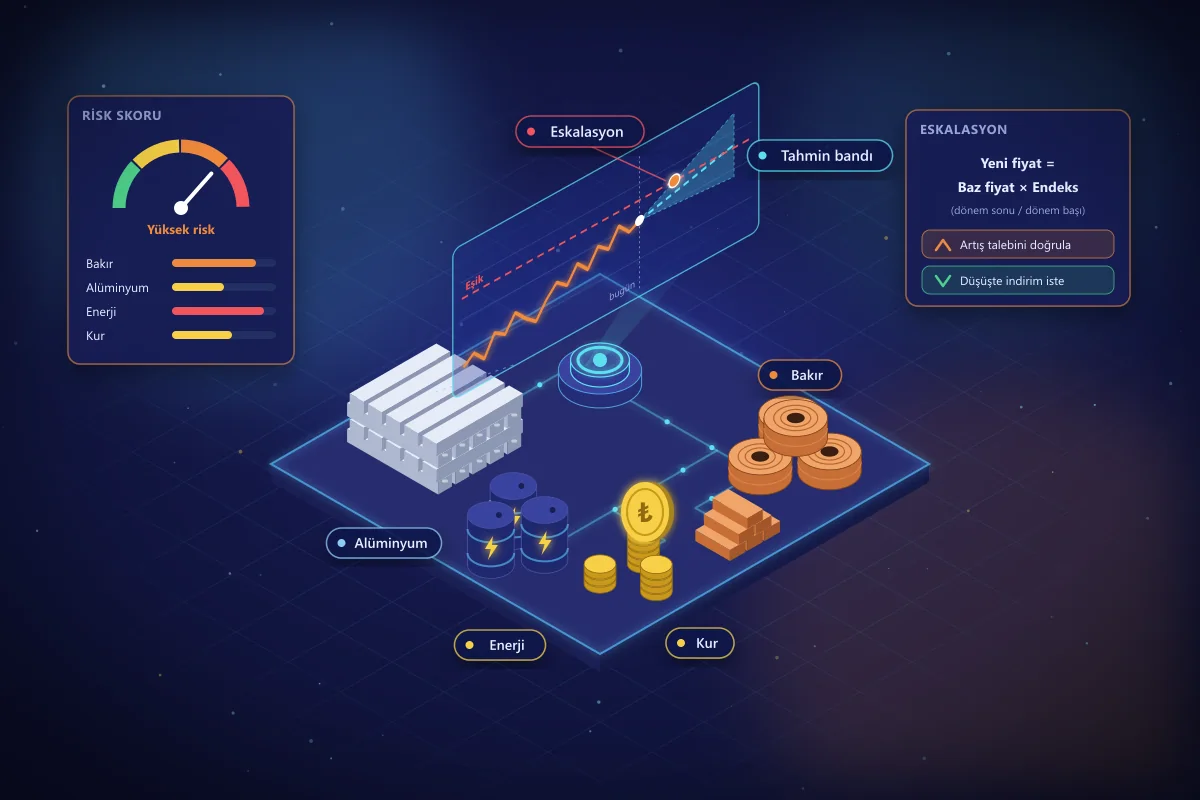
Commodity Price Risk: AI Forecasting and Escalation
Swings in copper, aluminum, energy, and exchange rates directly affect procurement costs. How to manage commodity risk with AI-powered price forecasting and escalation tracking.
