Transform Your Workflows With Robotic Process Automation
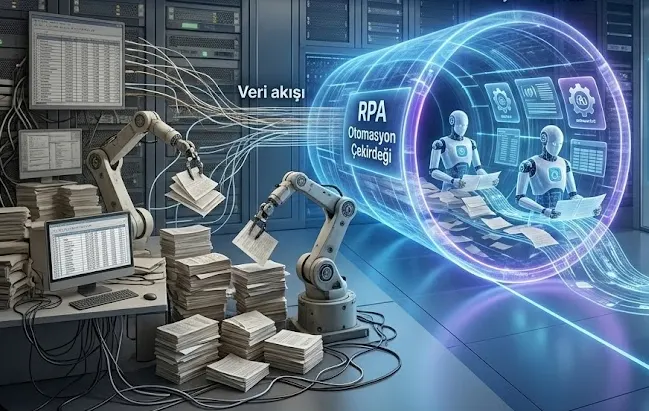
Robotic Process Automation (RPA) enables businesses to automate repetitive, rule-based manual tasks with software robots, and it is one of the digital transformation technologies with the fastest return on investment. As the global RPA market grows exponentially year after year, organizations in Turkey are also rapidly adopting the technology.
What Is RPA and How Does It Work?
RPA consists of software robots that precisely mimic the actions human users perform in digital systems. These robots can use on-screen applications just as a person would: they enter data, fill in forms, send emails, move files, transfer data between systems, and generate reports.
Unlike traditional automation solutions, RPA works without touching the underlying infrastructure of existing systems. It does not require API integration; it operates through the user interface. This reduces implementation time from weeks to days and ensures full compatibility with existing IT infrastructure.
Which Processes Can Be Automated?
RPA is most effective in high-volume, rule-based, repetitive processes. Invoice processing and reconciliation checks in finance, payroll calculation and leave management in human resources, order tracking and supplier management in procurement, and request classification and routing in customer service are all ideal candidates for RPA.
In areas with heavy regulatory requirements, such as customs operations, tax returns, insurance policy processing, and banking processes, RPA also delivers major advantages in both speed and compliance.
The Tangible Benefits of RPA in Business Processes
With RPA implementation, businesses can achieve savings of forty to seventy percent in operational costs. Human error rates fall by more than ninety percent. Processing times accelerate by five to ten times on average. Freed from routine tasks, employees can turn to value-added work such as analysis, strategy, and customer relationships.
Beyond this, RPA robots can work 24/7 without interruption; holidays and working hours do not apply to them. Because every process step is logged, full auditability and traceability are ensured. This is especially critical in heavily regulated sectors such as finance, healthcare, and the public sector.
Intelligent Automation: Combining RPA and AI
Classic RPA works with structured data and clear rules. However, a significant share of business processes involves unstructured data: free-text emails, scanned documents, handwritten forms, and the like. This is where AI comes in.
With natural language processing (NLP), the content of emails can be understood and classified automatically. With a combination of optical character recognition (OCR) and AI, scanned invoices can be read and transferred into systems. With machine learning, exceptions can be recognized and appropriate actions taken. This hybrid approach, known as "intelligent automation" or "hyperautomation," dramatically expands the scope of RPA.
Where Should an RPA Project Start?
A successful RPA journey begins with choosing the right processes. Not every process is suitable for automation. First, processes should be assessed for volume, frequency, error rate, and whether they are rule-based. Starting the pilot with a relatively simple process that delivers quick wins builds organizational confidence and lays the groundwork for scaling.
At BlueSkyDX, we support you through every stage of your RPA journey: process analysis, automation suitability assessment, robot design and development, go-live, and scaling. Our goal is not just to deploy robots, but to build a sustainable, scalable automation framework that is embedded in your corporate culture.
Looking Ahead
RPA technology continues to evolve rapidly. Trends such as automatically discovering automation opportunities through process mining, self-learning robots powered by AI, and low-code platforms that let business units build their own robots are shaping the future of RPA. Organizations that adapt early to this transformation will gain a significant edge in operational excellence and competitive advantage.
Related service
RPA and Intelligent Automation Solutions
Latest Insights
 blueskydx
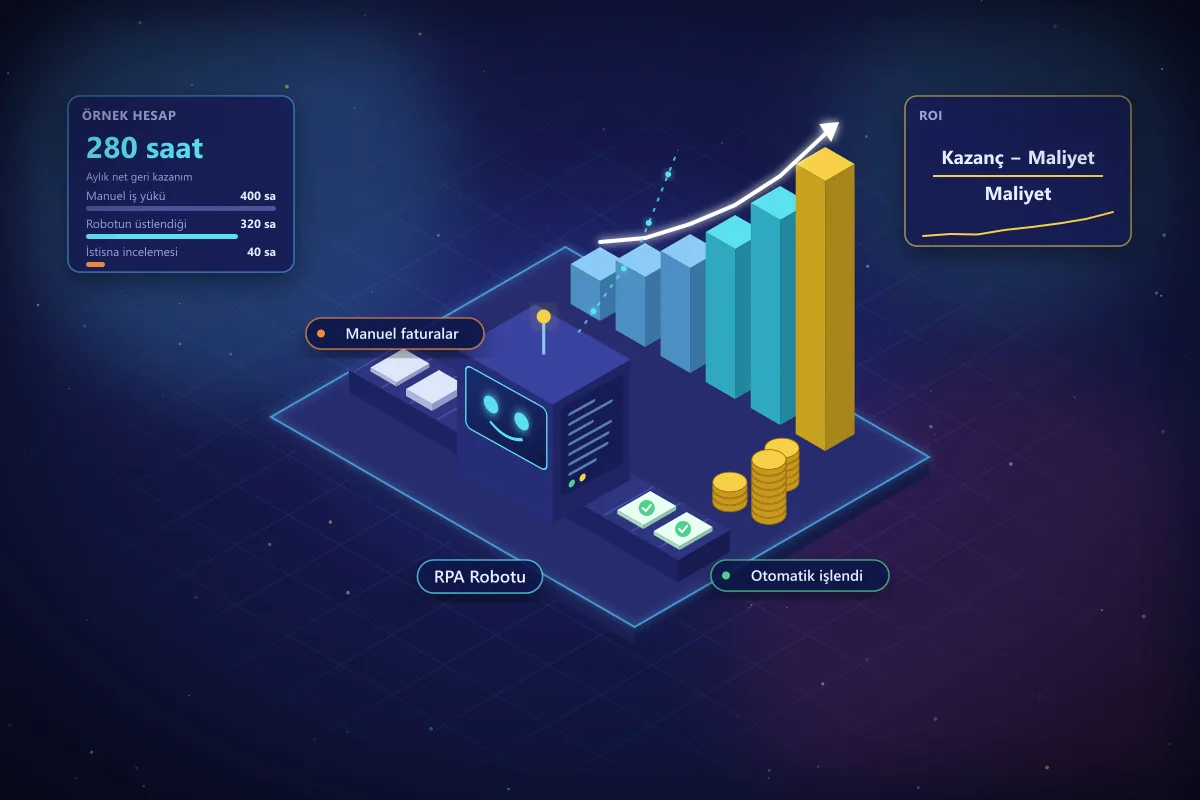
How to Calculate the ROI of an RPA Investment
Before starting an RPA project, how do you know which processes will actually pay off? A step-by-step ROI guide covering cost items, benefit items, a sample calculation, and common mistakes.
 blueskydx
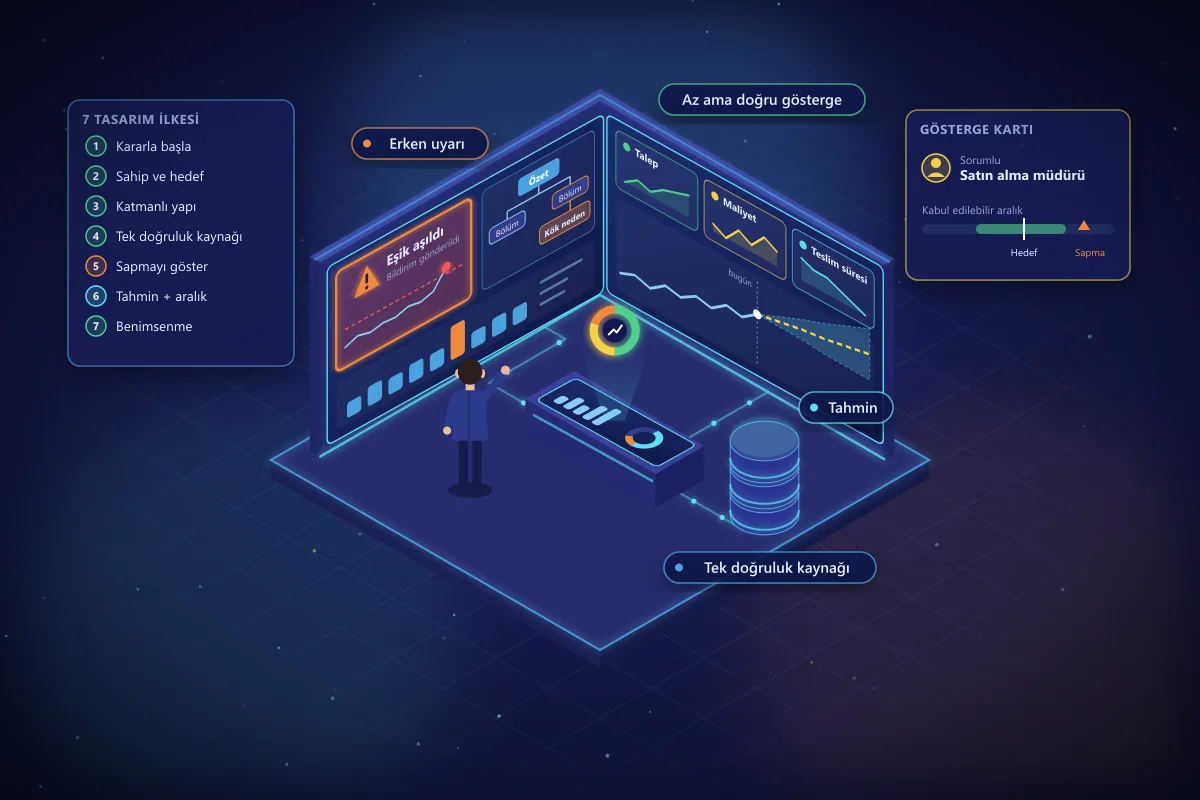
AI-Powered Management Dashboard Design: 7 Principles
Most management dashboards show a lot but drive few decisions. Seven design principles for an effective dashboard, from choosing the right indicators to early warnings, forecasting models, and user adoption.
 blueskydx
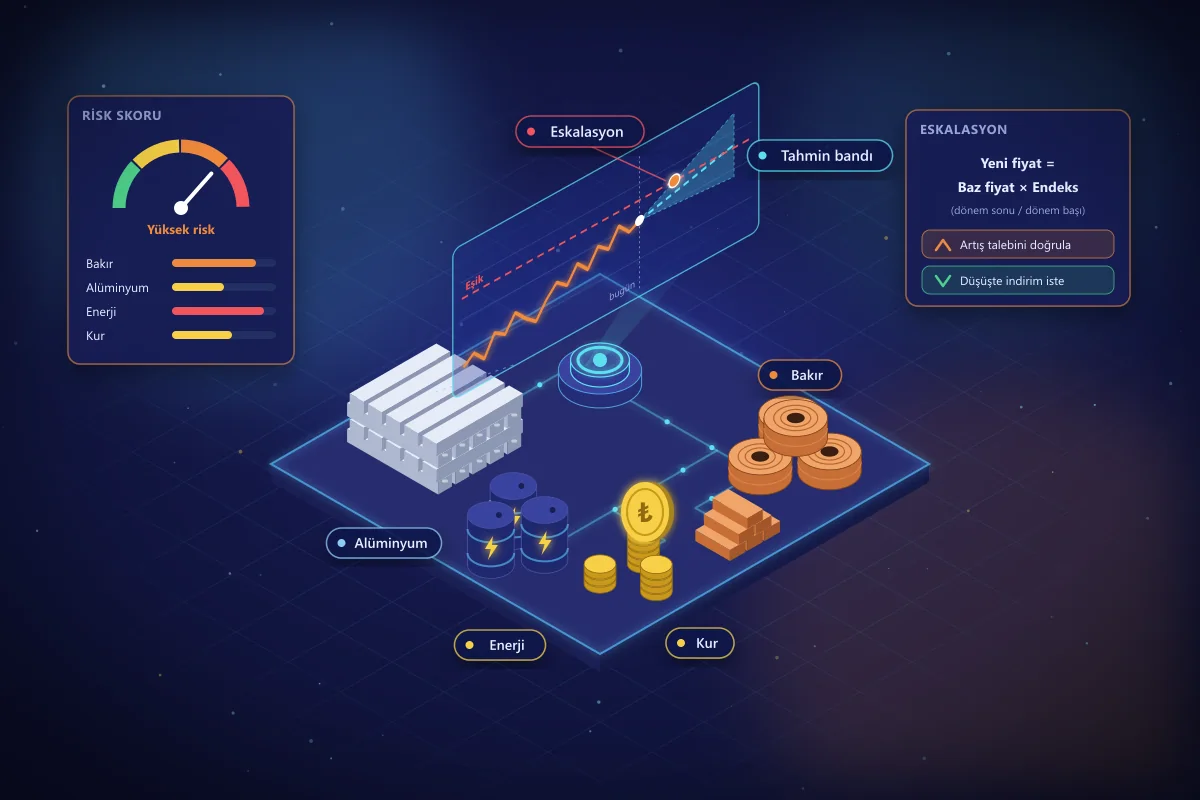
Commodity Price Risk: AI Forecasting and Escalation
Swings in copper, aluminum, energy, and exchange rates directly affect procurement costs. How to manage commodity risk with AI-powered price forecasting and escalation tracking.
