Predictive Maintenance Strategies with Big Data
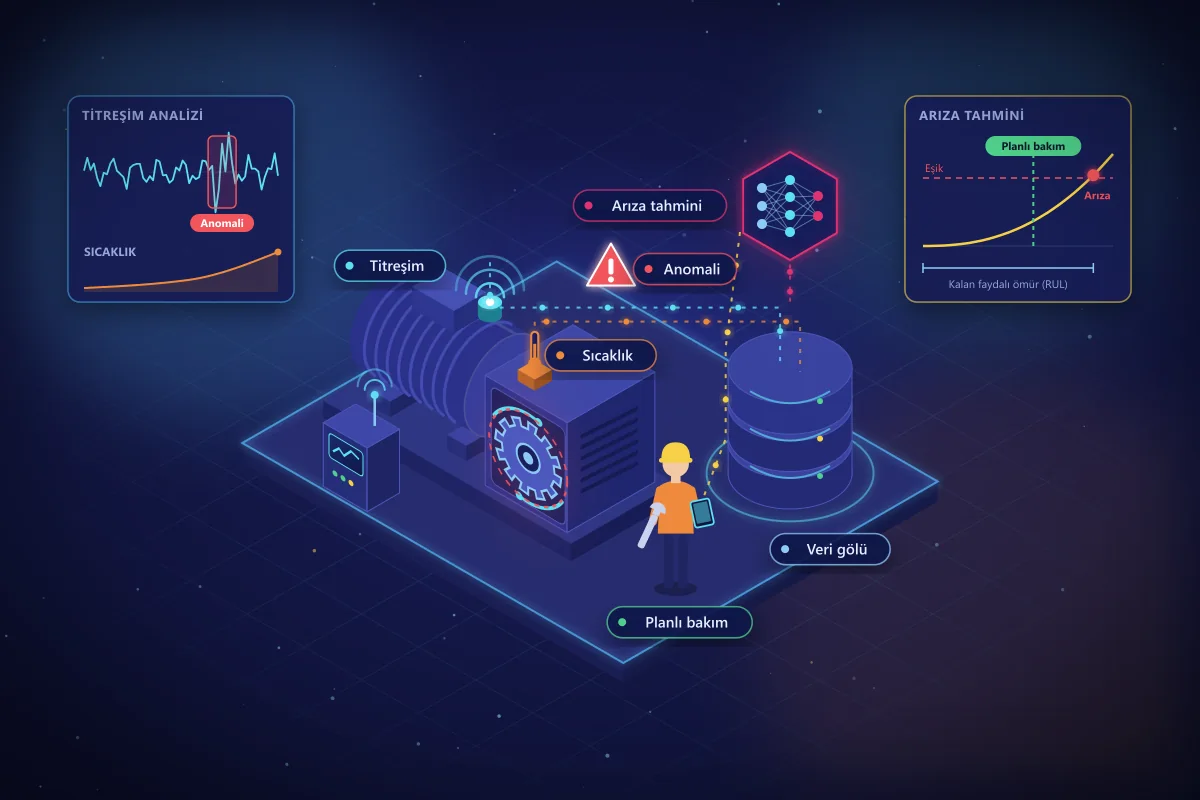
Predictive maintenance, powered by the combination of big data and machine learning algorithms, is driving a paradigm shift in industrial manufacturing. Traditional maintenance approaches either respond after a failure occurs (reactive maintenance) or follow fixed schedules (preventive maintenance). Both lead to either lost production or unnecessary maintenance costs. Predictive maintenance, by contrast, analyzes the actual condition of equipment and schedules maintenance exactly when it is needed.
IoT Sensors: The Source of the Data
Predictive maintenance is built on IoT sensors that continuously collect data from equipment. Vibration sensors detect mechanical wear, thermal sensors detect overheating, acoustic sensors detect abnormal sounds, and current sensors detect electrical anomalies. These sensors generate hundreds of data points per second, bringing the real-time health status of equipment into the digital realm.
Industrial IoT protocols (MQTT, OPC-UA) transmit this data to central systems with low latency. Edge computing infrastructure performs critical analyses close to the sensor, cutting response times down to milliseconds.
Failure Prediction with Machine Learning
The collected sensor data is processed by machine learning algorithms to identify failure patterns. Supervised learning models learn from historical failure data and recognize early on when similar conditions are re-emerging. Unsupervised learning algorithms flag deviations from the normal operating profile as anomalies.
Deep learning models deliver superior performance, especially in complex, multivariate systems. Time series analysis tracks trends in equipment behavior and estimates the Remaining Useful Life (RUL). As a result, maintenance teams can know weeks in advance when a failure is likely to occur.
Data Architecture and Real-Time Processing
Predictive maintenance systems require a robust data architecture capable of handling high-volume, high-velocity data streams. Data lakes store raw sensor data, stream processing engines perform real-time analysis, and data warehouses provide structured data for historical analysis.
Cloud-based architectures allow this infrastructure to be built in a scalable and cost-effective way. Hybrid approaches make it possible to process critical data locally while running historical analyses in the cloud.
Tangible Cost Benefits
Facilities that adopt predictive maintenance see unplanned downtime fall by as much as seventy to ninety percent. Maintenance costs drop by twenty-five to forty percent. Equipment life is extended by twenty to thirty percent. Spare parts inventory costs are optimized because it is known in advance which part will be needed and when.
Beyond that, production planning becomes more reliable. Order delays and customer dissatisfaction caused by unexpected downtime decrease. Energy consumption is optimized because inefficiently running equipment is detected early.
Implementation Roadmap
A predictive maintenance project should follow a phased approach. In the first phase, critical equipment is identified and the sensor infrastructure is installed. In the second phase, the data collection and storage architecture is established. In the third phase, machine learning models are developed and pilot implementations are carried out. In the final phase, the system is rolled out across the entire facility and a continuous improvement cycle begins.
At BlueSkyDX, we stand with you at every stage of your predictive maintenance journey, from sensor selection to data architecture and from model development to dashboard design. Our goal is to turn maintenance from a cost item into a strategic advantage.
Related service
Data Analytics and Decision Support Frameworks
Latest Insights
 blueskydx
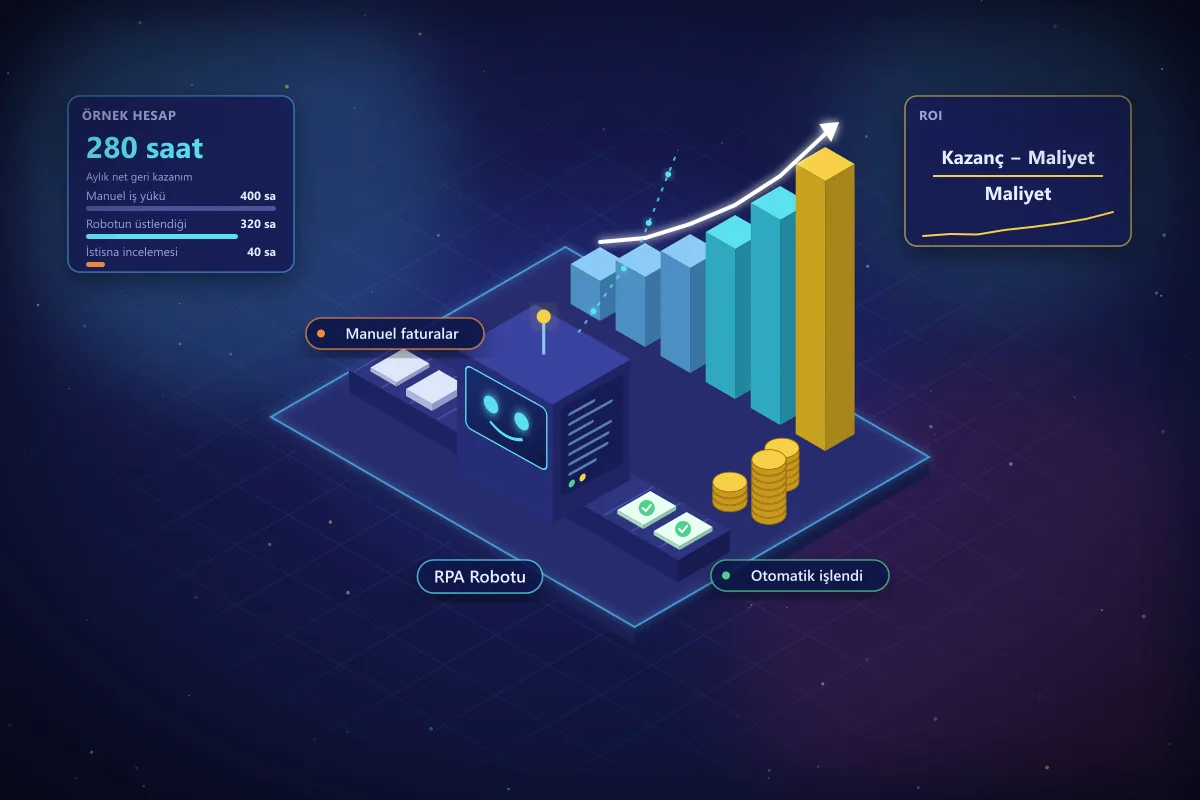
How to Calculate the ROI of an RPA Investment
Before starting an RPA project, how do you know which processes will actually pay off? A step-by-step ROI guide covering cost items, benefit items, a sample calculation, and common mistakes.
 blueskydx
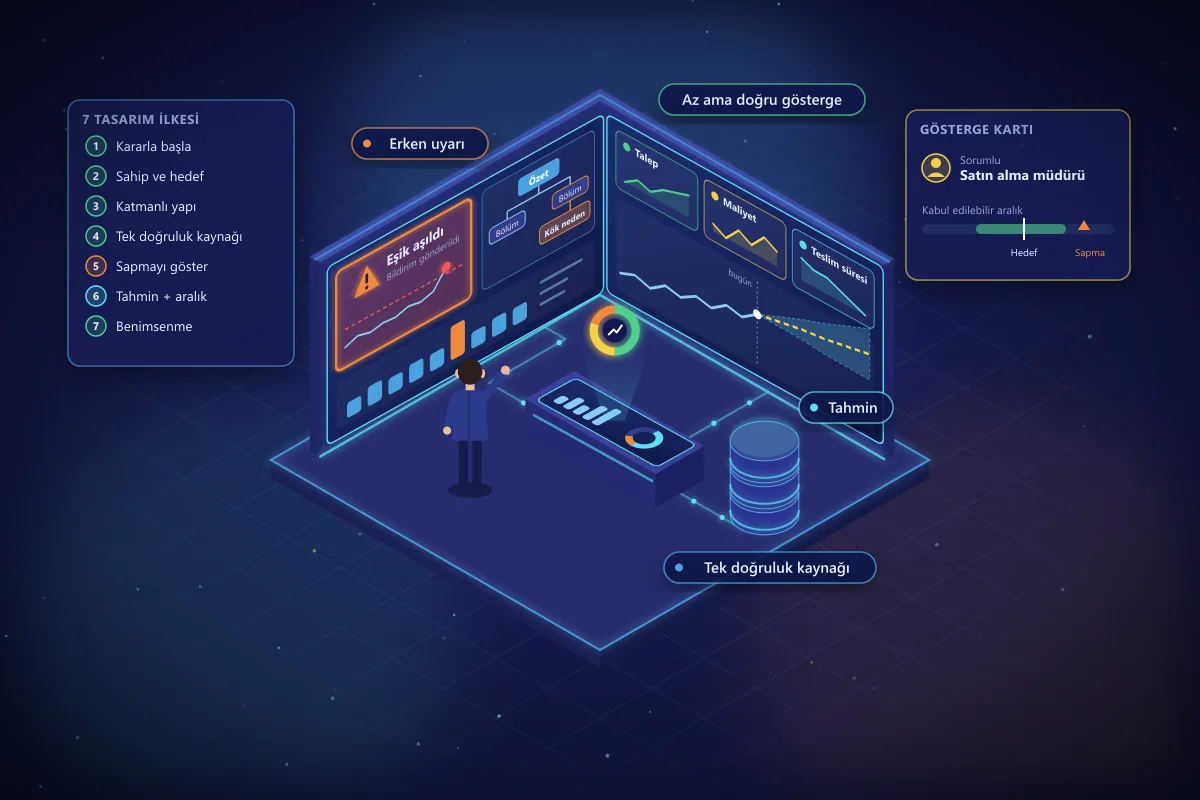
AI-Powered Management Dashboard Design: 7 Principles
Most management dashboards show a lot but drive few decisions. Seven design principles for an effective dashboard, from choosing the right indicators to early warnings, forecasting models, and user adoption.
 blueskydx
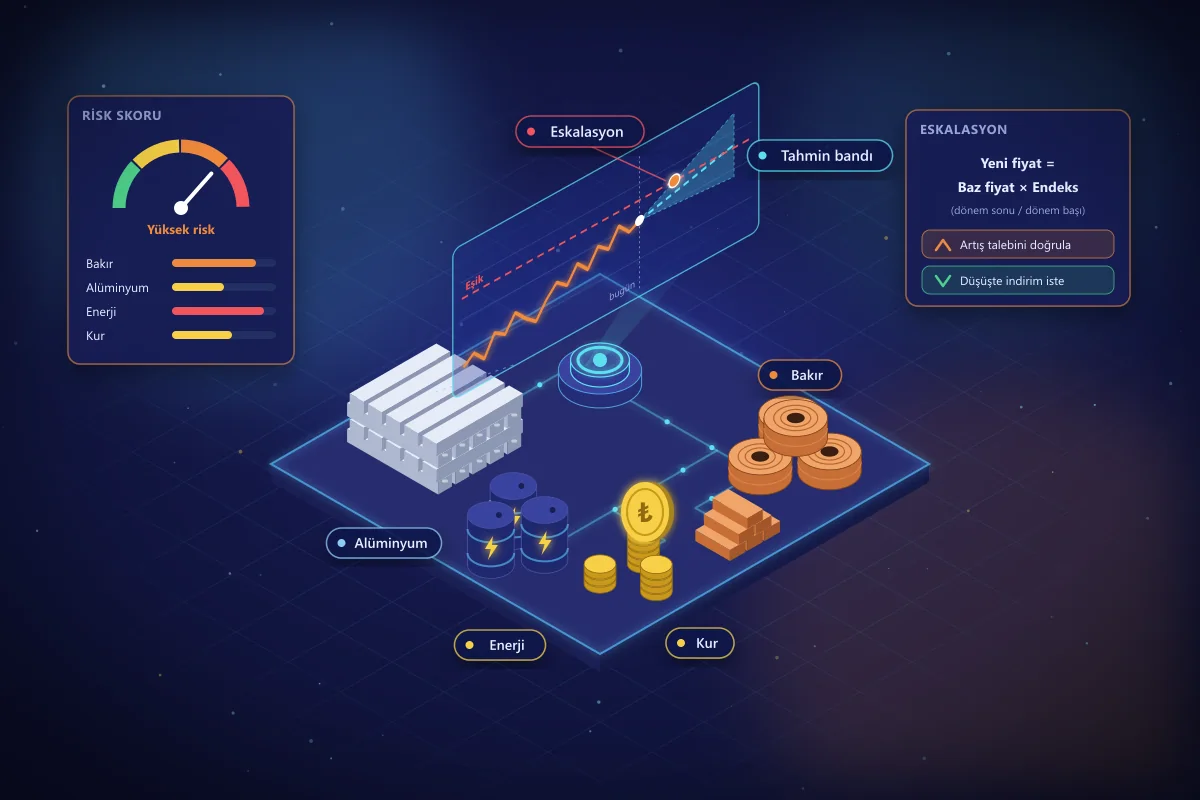
Commodity Price Risk: AI Forecasting and Escalation
Swings in copper, aluminum, energy, and exchange rates directly affect procurement costs. How to manage commodity risk with AI-powered price forecasting and escalation tracking.
